For most of the last decade, the small-firm end of UK construction has been stuck with two bad options: a £300 template site from a generalist builder, or a £5,000–£15,000 bespoke build from an agency that doesn''t really understand the trade. Zabble is the first serious attempt we''ve seen to collapse that gap.
Launched by Fabrick, one of the UK''s longest-running construction marketing agencies, Zabble packages the same studio, writers and SEO team that has worked for the likes of Sika, Doka, Baumit and NorDan into a flat £95/month subscription — with billing that only starts once the customer has approved the finished site.
That pricing model alone is worth paying attention to. On the Zabble homepage the proposition is stated plainly: "No templates. No AI builders. No hidden complications." You pay nothing up front, you don''t pay during the build, and you can cancel any time. For a sector where sole traders have been burned by 24-month Wix-reseller contracts, that''s a meaningful shift.
The product itself is positioned firmly against the AI-builder wave. Where Wix, Squarespace and the new generation of generative tools hand the trade a robot, Zabble hands them a 25-strong construction marketing team. Every site is briefed the way Fabrick briefs a national contractor — discovery questions about the work, the customers and the differentiators — and the copy is written by humans who actually understand roofing, groundworks, M&E or fit-out.
There''s a clear SEO and AI-search angle baked into the offer. Zabble is explicit that sites are "structured, fast and properly optimised — built to rank on Google and get cited by ChatGPT and AI search." That second half matters. The contractors winning enquiries in 2026 are the ones whose service pages are clean enough to be quoted verbatim by LLMs, and most template builders simply don''t output markup that survives that test.
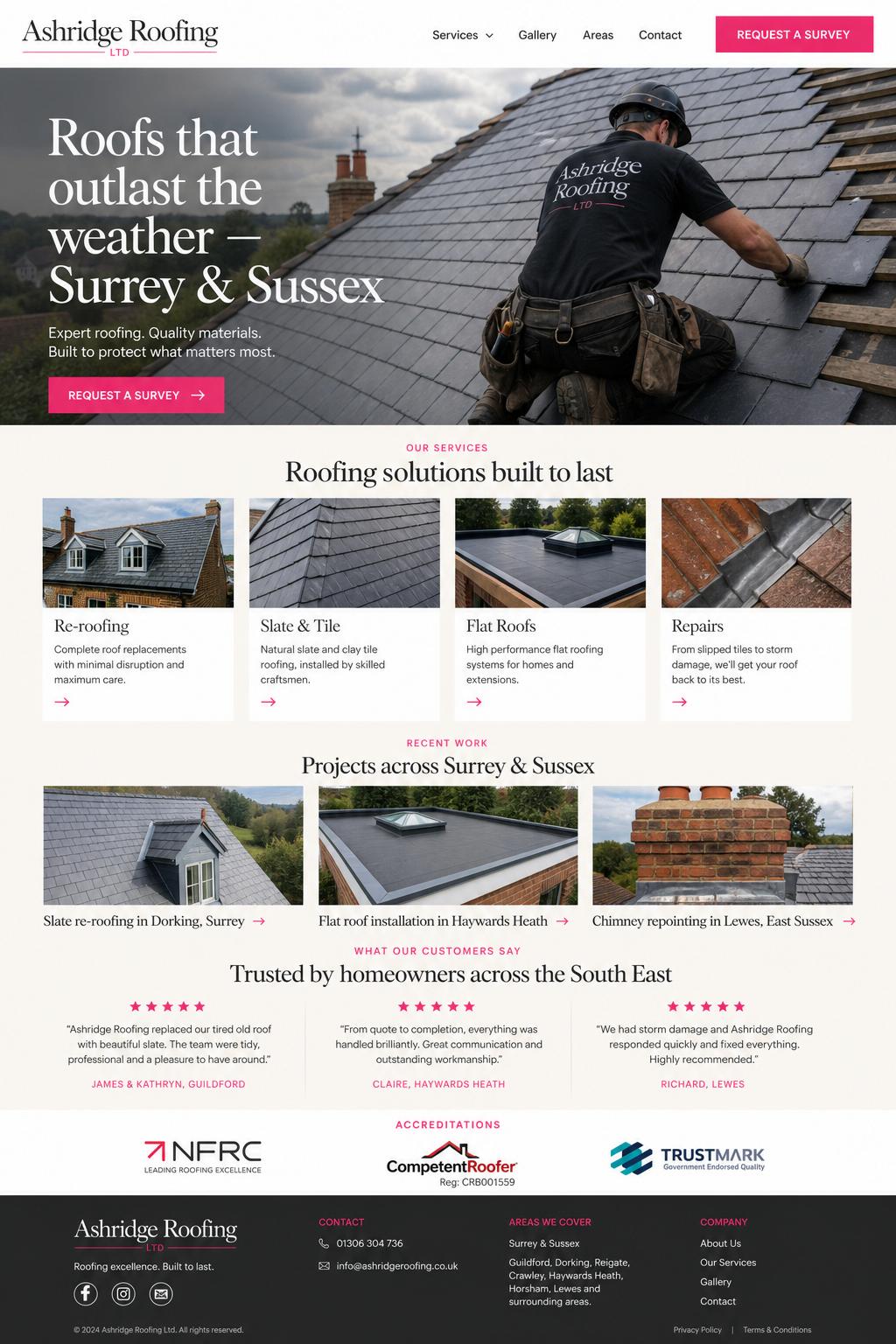
The standard build runs to six to eight pages — Home, About, Gallery, Service pages and a Contact page engineered for enquiries — with bespoke add-ons like Meet the Team, Pricing or Accreditations available on request. The example sites gallery gives a feel for the design language: editorial, photo-led, and noticeably calmer than the busy, badge-heavy look that still dominates the trade-website market.
From a Soars Group perspective, what''s most interesting is the strategic move. Fabrick isn''t chasing the small-firm market with a cut-down version of its agency offer; it''s spinning out a separate brand, a separate domain and a separate price point so the parent agency can stay focused on national contractors and manufacturers. That''s the same playbook used by professional services firms launching SME arms, and it''s rare to see it executed this cleanly inside construction marketing.
It also raises the bar for everyone else in the space. If a 40-year-old construction agency can deliver bespoke, human-written, AI-search-optimised websites for £95/month — with no up-front cost — the "cheap template plus a domain" tier of the market is going to look increasingly hard to justify. Small contractors who would previously have settled for a generic builder now have a credible route to an agency-grade site at a tradesman''s price point.
The signup flow on zabble.website is light-touch by design: open an account, upload photos and bullet-point notes, and let the Fabrick team do the writing. For a sector where most owner-operators would rather be on site than wrestling a page builder, that''s exactly the right friction level.
Whether Zabble ends up reshaping the small-firm web design market or simply becomes a profitable side-channel for Fabrick, it''s one of the more thoughtful product launches in UK construction marketing this year — and a useful reminder that the most defensible position in this industry is still deep sector knowledge, not the slickest tech stack.